

There comes a time when an employee will have to leave an organization. Preparing for this inevitable event is an essential aspect of the employee life cycle in any organization. Just like onboarding ushers a new employee into a new role, there also is an adequate procedure for those leaving the organization called offboarding. This article will define offboarding, its importance, advantages, and necessary steps to follow.
What Is Offboarding?
Offboarding is the professional separation between an employer and an employee. It happens when a worker retires, resigns, or an employer ends their contract. The offboarding definition highlights the end of someone’s journey with an organization.
While offboarding sounds like a nightmare for both employer and employees, it can be a straightforward and enjoyable process – especially if both parties are on good terms.
The Importance of Offboarding
Offboarding is a crucial part of the employee lifecycle – like onboarding, engagement activities, training, and performance management. Unfortunately, employers give little attention to this aspect of the employee cycle.
The lay-off of 900 workers on a Zoom call from Better.com late last year and 2,500 workers from Carvana in May of this year support our narrative. In both cases, the lay-off resulted from downsizing because of COVID-19, but the companies handled the offboarding poorly, leading to a backlash from the employee and media.
Offboarding puts the procedures in place to allow for a smooth transition for both the employer and employee. This offboarding process is necessary for both parties to depart on a convenient note. It also improves the company brand and facilitates passing on valuable knowledge to a new replacement.
Advantages of Offboarding

Source: Freshworks
-
Leaves the Door Open for Returning
A goodbye isn’t the end of a professional relationship between the employer and employee. People leave for various reasons, and if their reason allows them to become boomerang employees in the future, it’s worth investing in offboarding procedures.
People resigning for a better opportunity may be open to a return for a senior role. Some may also be open to a return if they don’t fit into the new company culture. A 2015 study shows that 76% of HR managers will consider re-hiring a former staff, and employees are 15% more likely to reapply for a former employer. These figures will rise due to the effect of the pandemic.
-
Turn Employees into Brand Ambassadors
A smooth employee offboarding can be an excellent catalyst for them to become a brand ambassador. Sites like Glassdoor give voice to former and current employees about their employers. And too many negative reviews will chase away future talents from your organization. A study by Glassdoor shows that as many as 70% of people check an employer rating below before they begin their application process.
-
Company Security
Security is a vital aspect of the offboarding procedure. It’s easy to forget some employees still have access to the organization’s Intranet or own files or information that can lead to a breach of sensitive data. To show how common this is, 20% of security breaches happen because of poor offboarding performance for departing employees. A situation where someone still has a working ID card, valid email, or login details can be detrimental to a company.
-
Improve Company Processes Going Forward
An employer’s understanding of why an employee is leaving is necessary to improve processes and grow the organization. When workers are about to depart, HR conducts an exit interview for them. The exit interview gathers details on the employee’s journey in the organization, and it’s a reflection of their stay there, and it’s possible to get insight from such interviews. Not having an effective offboarding process can lead to mishandling or non-existent exit interviews.
-
Less Disruptive Activities
Such a process aims to ensure workers in various departments can continue their everyday tasks with minimal disruption. A good offboarding process ensures the company knows about the departing employees and the necessary steps the employee will need to take for a smooth transition.
Checklist When Offboarding Employees
The offboarding checklist is a document that helps to facilitate the offboarding steps. They are a list of activities that assist a departing worker and other departments with a seamless transition. The checklist can also double as the steps or to-do list of the offboarding process.

Source: SelectHub
-
Appreciate Them for Their Service
Appreciation should always be in order, except if the reason for the employee’s departure is termination. Thanking them for their service and wishing them well is the first step after receiving their letter of resignation or retirement. Termination means the worker has broken trust, and the employer-employee relationship is not repairable, so a dismissal happens. The letter should be straight to the point regarding the matter.
-
Communicate Departure to the Rest of The Organization
Next, HR communicates the employee’s departure to the company. They do this for two reasons:
- The first one is to inform other departments who will partake in the offboarding process.
- The second is to inform employees who want to wish them farewell.
The employee department will already have this information, as most protocols ask employees to discuss their resignation with their supervisor before formally submitting it to HR.
-
Ensure the Transfer of Their Knowledge
Transferring their know-how to an in-house employee or a recruit is one of the most crucial steps. You don’t want a situation where an employee leaves and others struggle to operate a system or have inadequate information on a client. Knowledge transfer ensures they pass their technical and company knowledge to one who will take over their day-to-day work.
You can encourage the worker to create a comprehensive handover note for the person taking over. They can also include a video; demonstrating a process or processes and handing out tips to their successor. Employees with good terms with the company will give more and are open to returning to complete documents after leaving the organization.
-
Recover Organization Assets
Recovering assets is essential because you can easily forget. Depending on the industry, company assets will include:
- Laptops
- Mobile Phones
- Uniforms
- ID Cards
- Credit Card
- Cars
- Company Badge
It’s not unheard of for former employees to impersonate a company’s current staff using their former employer’s identification card, badge, or uniform.
-
Rescind System Access
Most office workers have their login IDs and password, allowing access to sensitive information on the network. Companies with CRM and intra-email systems should revoke worker access to stop voluntary or involuntary data breaches. If the employee had administrative access to an organization’s social media pages, create a new password to reduce the likelihood of a security breach.
-
Complete All Necessary Paper Work
The offboarding process will ensure the proper filing. These include:
- The resignation letter and its responses.
- The precise calculation and documentation of their severance package.
- The signing of any non-disclosure documents.
Proper filing ensures orderliness and a complete record.
-
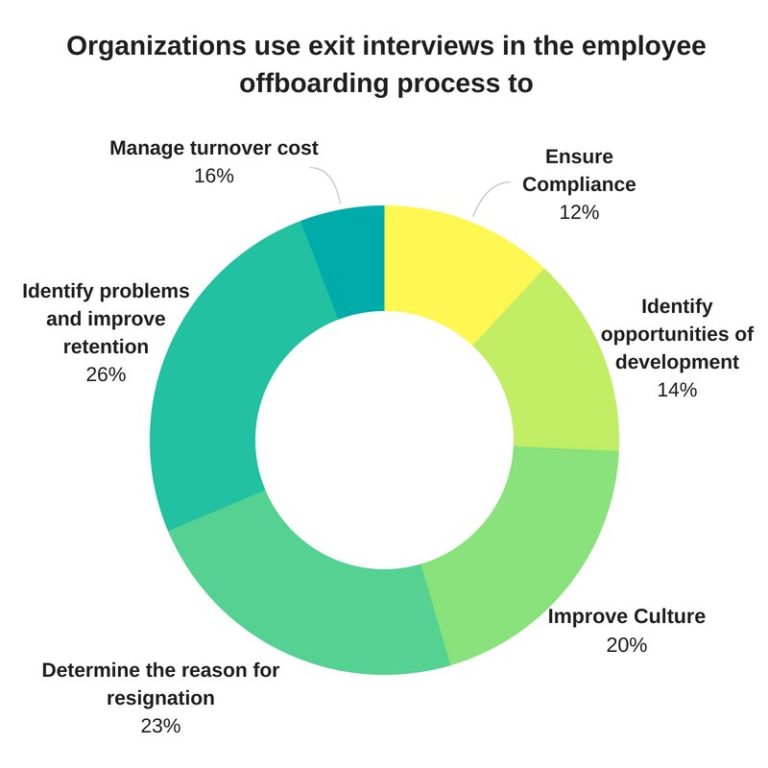
Conduct an Exit Interview
An exit interview is one more thing offboarding employees should participate in. An exit interview presents the employer with the last opportunity to patch things up with a distrust worker and leave a lasting impression on the once on good terms. It is also a time when employers can gain insight into the running of their business.
Source: AIHR
Some popular exit interview questions include:
- What motivated you to look for a new job?
- What can the company improve on?
- Do you feel you had the training and tool to perform your duties? If not, why?
- Will you consider returning to the company if an opportunity presents itself?
- Would you recommend working in this company to others?
- What part of the Job did you least enjoy and most enjoy?
-
Stay in Touch
This step is more of an after-offboarding process. Staying in touch means you always remain in contact with the employee. Having a network of ex-employees that have left but are still on good terms with the company is a way to keep the relationship and welcome them back in case they consider returning.
Tips to Help with Offboarding Employees
Here are some tips to take into consideration. We’ve prepared a relatively short list to help you get started fast.
Respect the Employee
Regardless of the reason the employee is departing the company, be professional about their departure.
Have a Checklist to Address Different Reasons for Departing
There are various reasons employees depart – so having slightly different offboarding procedures is a given. If an employer ends an employee’s employment for gross misconduct or fraud, they wouldn’t have the same offboarding process as someone voluntarily resigning. The same applies to someone who works for many years and retires.
Double-check the Checklist with the Departing Employee
Offboarding can happen alongside onboarding or other pressing HR activities. So, it’s not uncommon to find an HR personnel who forgets to cross-check with the employee. Not doing this may cause the worker to leave with one of the company properties or IT not rescinding system access.
Conclusion
Offboarding can be a long and tiring process, and preparing adequately and following the right steps can make a long process go on seamlessly. We cannot overemphasize the importance of creating proper offboarding processes when remote work is the norm.


